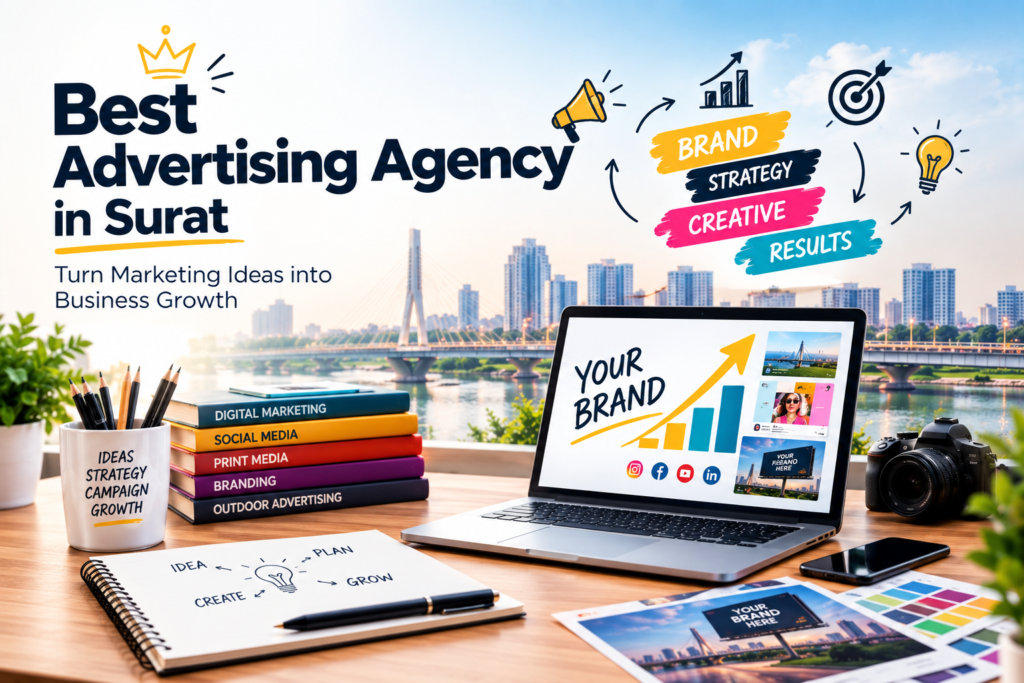
Best Advertising Agency in Surat – Turn Marketing Ideas into Business Growth
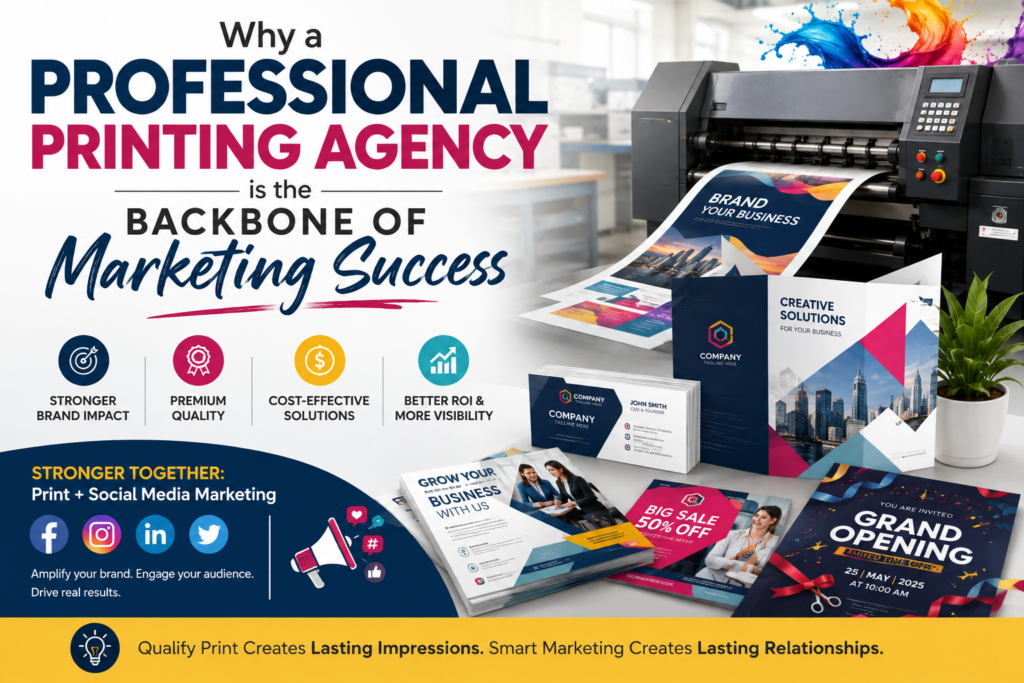
In a competitive marketplace, getting customers to notice your business is just the beginning. Businesses need creative communication, consistent branding, and effective promotional strategies to build long-term relationships with their audiences. Working with the Best advertising agency can help businesses transform their marketing ideas into professional campaigns that attract attention and support business growth. From digital promotions and social media marketing to print advertising and outdoor branding, modern advertising includes a wide range of activities. A professional advertising agency brings creative skills, strategic planning, and marketing knowledge together to help businesses communicate their message through the right channels. For businesses in Surat, having an effective advertising strategy can be particularly valuable because the city has a diverse and competitive business environment covering textiles, fashion, retail, manufacturing, food, real estate, and professional services. Turn Your Brand Into a Recognizable Identity A strong brand identity helps customers recognize and remember a business. Advertising is not only about promoting individual products; it is also about creating a consistent image across different marketing channels. A professional advertising agency can help develop visual elements such as logos, color schemes, promotional graphics, advertisements, packaging, banners, brochures, and social media creatives. When these elements follow a consistent style, customers can more easily identify the brand. Consistency can also create a professional impression and help businesses differentiate themselves from competitors. Reach Customers Where They Spend Their Time Modern customers use multiple platforms to discover businesses. They may search on Google, browse social media, read newspapers, notice outdoor advertisements, or receive promotional messages online. This makes it important for businesses to use a combination of suitable marketing channels. The Best advertising agency approach is not about using every available platform; it is about selecting channels that are relevant to the target audience. For example, a local retail business may benefit from social media campaigns, outdoor advertising, and local print promotions, while a B2B company may focus more on search marketing, professional content, and digital advertising. Creative Ideas That Make Advertising More Engaging Creativity is one of the most important elements of advertising. Customers encounter numerous advertisements every day, so businesses need content that is relevant, clear, and visually appealing. Advertising professionals can develop campaign concepts, headlines, promotional designs, videos, social media content, and other creative materials that communicate a business message effectively. Creative advertising should also have a purpose. Whether the goal is increasing awareness, promoting a new product, generating inquiries, or encouraging customers to visit a store, the creative idea should support the campaign objective. Digital Marketing for a Wider Online Presence Digital marketing has become an important part of modern advertising. Businesses can use search engines, social media platforms, websites, email campaigns, and online advertisements to connect with potential customers. A professional advertising agency can help businesses develop digital campaigns based on their audience and marketing goals. Search engine optimization can support organic visibility, while paid advertising can help businesses reach specific audiences more quickly. Social media campaigns can encourage customer interaction and provide opportunities to share products, services, offers, and useful content. Using these channels together can create a stronger online presence. Social Media That Builds Customer Connections Social media is more than a platform for publishing promotional posts. It gives businesses an opportunity to communicate directly with customers. Creative posts, reels, product videos, testimonials, educational content, polls, contests, and promotional campaigns can encourage customers to interact with a brand. An experienced advertising team can create a content strategy that maintains consistency while keeping the audience interested. Social media advertising can also be used to reach selected audience groups based on factors such as location, interests, and other campaign settings. Print Advertising Still Has a Place Although digital marketing continues to grow, print advertising remains useful for many businesses. Newspapers, brochures, flyers, catalogs, posters, business cards, and other printed materials can provide direct and tangible brand communication. For businesses targeting local audiences in Surat, print promotions can complement digital campaigns. A brochure or flyer can include a website address, QR code, social media handle, or special offer that connects offline customers with online platforms. Combining traditional and digital advertising allows businesses to communicate with customers through multiple touchpoints. Outdoor Advertising for Strong Local Visibility Outdoor advertising can help businesses reach people in specific locations. Billboards, hoardings, LED displays, banners, shop signage, and other outdoor formats can increase visibility among local audiences. The effectiveness of outdoor advertising depends on factors such as location, design, message clarity, visibility, and audience relevance. A professional advertising agency can help businesses develop designs that communicate the main message quickly. This is particularly important because people often have only a few seconds to notice an outdoor advertisement. Build Trust Through Consistent Communication Customers are more likely to understand a brand when its communication is clear and consistent. If a business uses completely different designs, messages, and brand styles across its website, social media, advertisements, and printed materials, customers may find it difficult to recognize the brand. An advertising agency can help maintain consistency across different promotional materials. Consistent messaging can support brand recognition and create a more professional customer experience. Data and Creativity Working Together Successful advertising requires both creativity and measurement. A visually attractive campaign is valuable, but businesses also need to understand how audiences respond to it. Depending on the campaign, businesses can track reach, impressions, engagement, website visits, inquiries, leads, conversions, and sales. These insights can help identify which campaigns and marketing channels are performing effectively. Future campaigns can then be adjusted based on the available performance data. The Best advertising agency strategy therefore combines creative thinking with continuous analysis and improvement. Finding an Advertising Partner That Fits Your Business Every business has different marketing requirements. Before choosing an agency, businesses should consider their objectives, target audience, budget, preferred marketing channels, and required services. Reviewing an agency’s portfolio can provide insight into its creative approach. Businesses should also evaluate communication, campaign planning, service capabilities, transparency, and reporting. A good agency should take the time to understand the business